NeuronsVR exclusive peer-reviewed research and registered clinical trials for therapy through VR.
—— NeuronsVR Clinical Framework
Behavioural & Psychological Symptoms of Dementia:
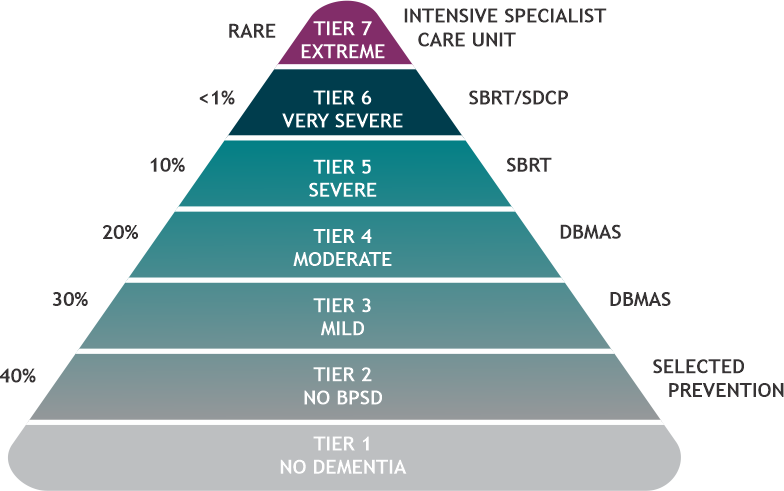
NeuronsVR's framework outlines the spectrum of behavioral and psychological symptoms of dementia, ranging from baseline wellbeing at Tier 1 through to Tier 7 extreme care.
Each tier represents a distinct level of support, giving care teams a structured model to identify client needs and deliver appropriate non-pharmacological care.
—— Dementia Facts · Australia (2024)
The Numbers Behind The Need
DEMENTIA IN AUSTRALIA · 2024
425,000
Australians living with dementia
2023: 411,100
2065 (projected): ~1,100,000
AGED CARE RESIDENTS
54%
of residential aged care living with dementia
UNPAID CARER BURDEN
60+ hrs
Average weekly care by unpaid carers of people with dementia
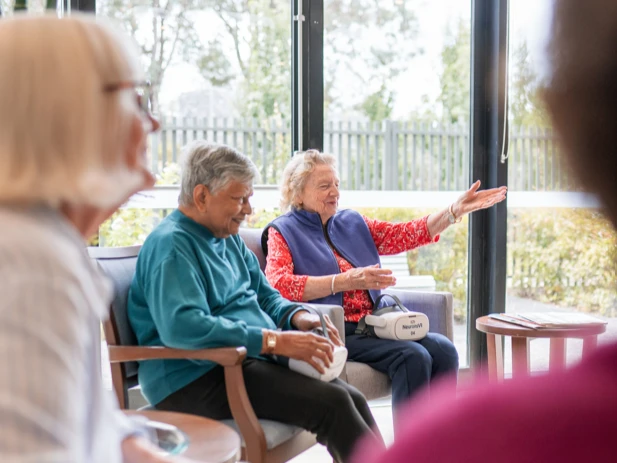
Consistent observed improvements in mood, social engagement, and cognitive activity, with previously isolated residents participating in group sessions and family members reporting residents recalled VR experiences despite daily memory lapses.
NeuronsVR Virtual Reality Therapy for People with Dementia in Acute Hospital Settings
Registered 2024 (ACTRN12624001473550)
NSW Health Acute care setting
Randomised Control Test
A registered RCT measuring the effect of NeuronsVR therapy as the dose and frequency of chemical restraint required for people experiencing BPSD in acute hospital settings; results pending publication.
A Pilot RCT of NeuronsVR therapy for BPSD in dementia
Randomised Control Test
Registered 2024
User acceptance rate
Registered as a pilot RCT to evaluate VR therapy as a non-pharmacological alternative tp psycotropic medication, managing agitation, anxiety, and behavioural distress in people with dementia admitted to acute hospital settings.
In a sample of hospitalised people with dementia, 100% of participants completed the VR intervention and achieved a mean Engagement of a Person with Dementia Scale (EPWDS) score of 40.0/50.0 (SD 7.3), with the majority reporting they 'liked' or 'strongly liked' the experience, demonstrating feasibility, acceptability and safety in an acute hospital setting.
NeuronsVR Therapy programs individual
care plans with evidence-based, non-pharmacological interventions.
2025
Calvary Health Care, published on calvarycare.org.au
Calvary Health Care News — "Virtual reality enriches lives"
Across multiple Calvary aged care homes, residents experienced improved emotional wellbeing, reminiscence, and cultural connection through NeuronsVR sessions, including a multilingual pilot at Calvary Springvale and a 95-year-old resident moved to tears at a virtual classical music concert at Calvary Flora McDonald.
A Systematic Review of IS Literature in Dementia Care: An Application of the NASSS Framework
Feng, Z., Kurian, J.C., Prasad, M., Biloria, N., Saravanakumar, P. — University of Technology Sydney (Computer Science, Architecture, Nursing & Midwifery)
OPUS @ UTS — Open Publications of UTS Scholars. A Systematic Review of IS Literature in Dementia Care: An Application of the NASSS Framework
A PRISMA-methodology systematic review identified five key themes to guide future dementia care technology research, confirming VR as a clinically relevant intervention and highlighting interoperability, economic viability, and alignment with patient and caregiver needs as the primary implementation challenges.
Research Conducted With Australia's Leading Institutions.
Australian facilities and research institutions have trialled NeuronsVR in real care settings. Results have been registered with ANZCTR and published across indexed academic journals.