Therapy Techniques
NeuronsVR therapy is built on established evidence and adapted for delivery through virtual reality.

—— Technique 01
Reminiscence, Cultural Connection and Group Social Engagement
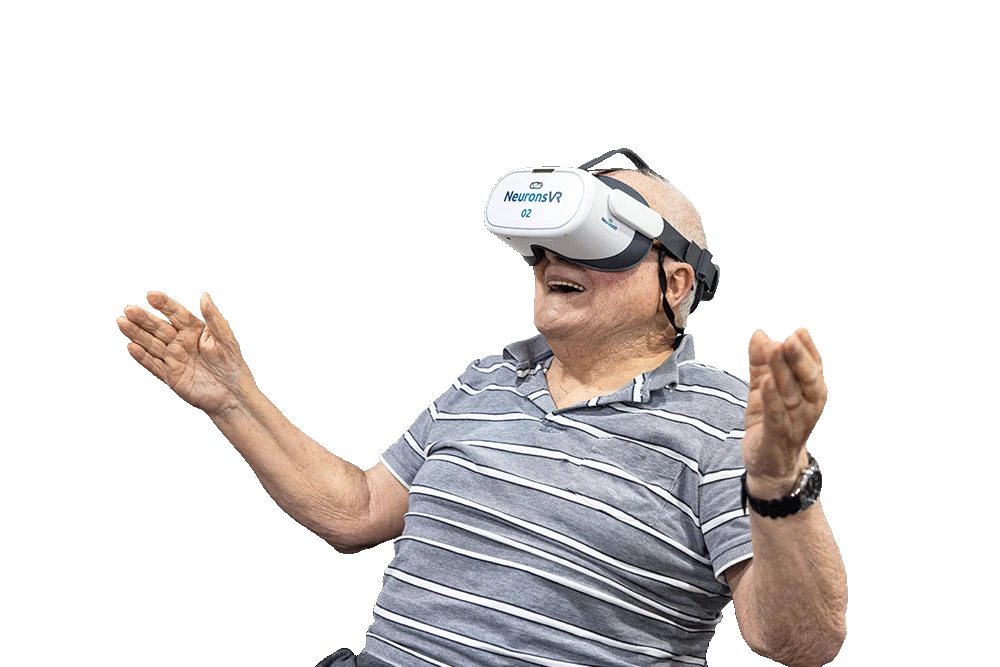
Reminiscence therapy draws on a person’s past, the places, sounds and events that shaped them, to support memory recall, identity and emotional wellbeing. It is one of the most widely studied non-pharmacological approaches in dementia care, with published evidence for reduced agitation, improved mood and increased social interaction.
Each session is built by our clinical team, pairing the destination with sound therapy and paced narration to support calm and sustained attention. A NeuronsVR session delivers the same quality reminiscence therapy no matter the time or location.
How It Works in Practice
Staff select a destination relevant to a resident’s background, whether that is a coastal town, a country they emigrated from or a familiar rural setting. A resident who grew up in regional Italy revisits the streets of their childhood. A First Nations resident returns to a place of cultural significance.
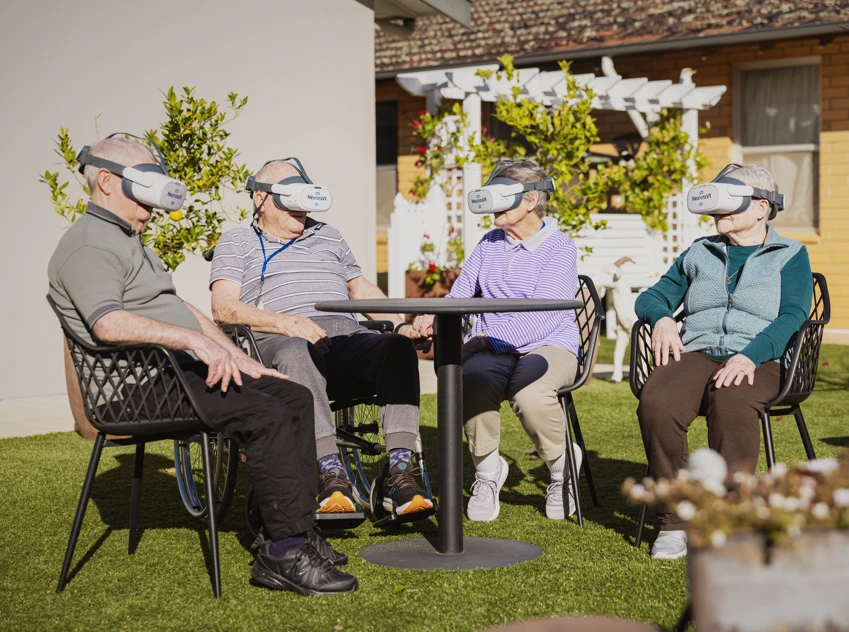
Run as a group, a shared experience gives residents something to talk about together, and gives families something to do on a visit beyond making conversation.
—— Technique 02
Multisensory Stimulation
Multisensory stimulation engages sight, sound, touch and smell to support calm, reduce distress and encourage engagement in people with cognitive or sensory impairment. It draws on the principles of Snoezelen and sensory modulation, with evidence for reducing BPSD and improving quality of life in dementia care.
How It Works in Practice
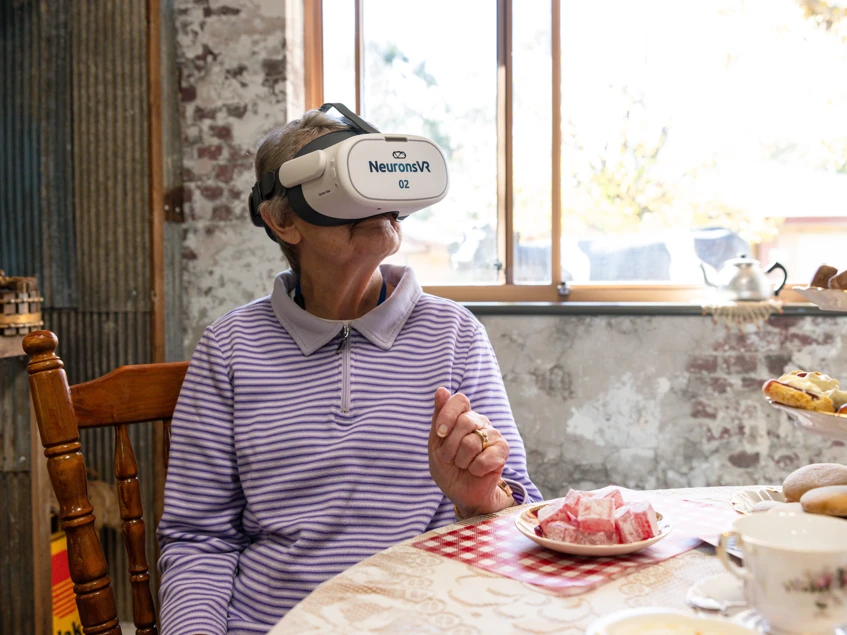
NeuronsVR pairs visual and auditory content with physical sensory elements set up by care staff. A beach scene runs alongside a bowl of warm water at the resident’s feet and a tray of sand and seashells on the table. A garden experience is paired with fresh flowers. The VR content provides the visual and auditory base while staff add touch and smell, turning a screen-based session into something residents experience with their whole body.
—— Technique 03
Movement & Physical Therapy
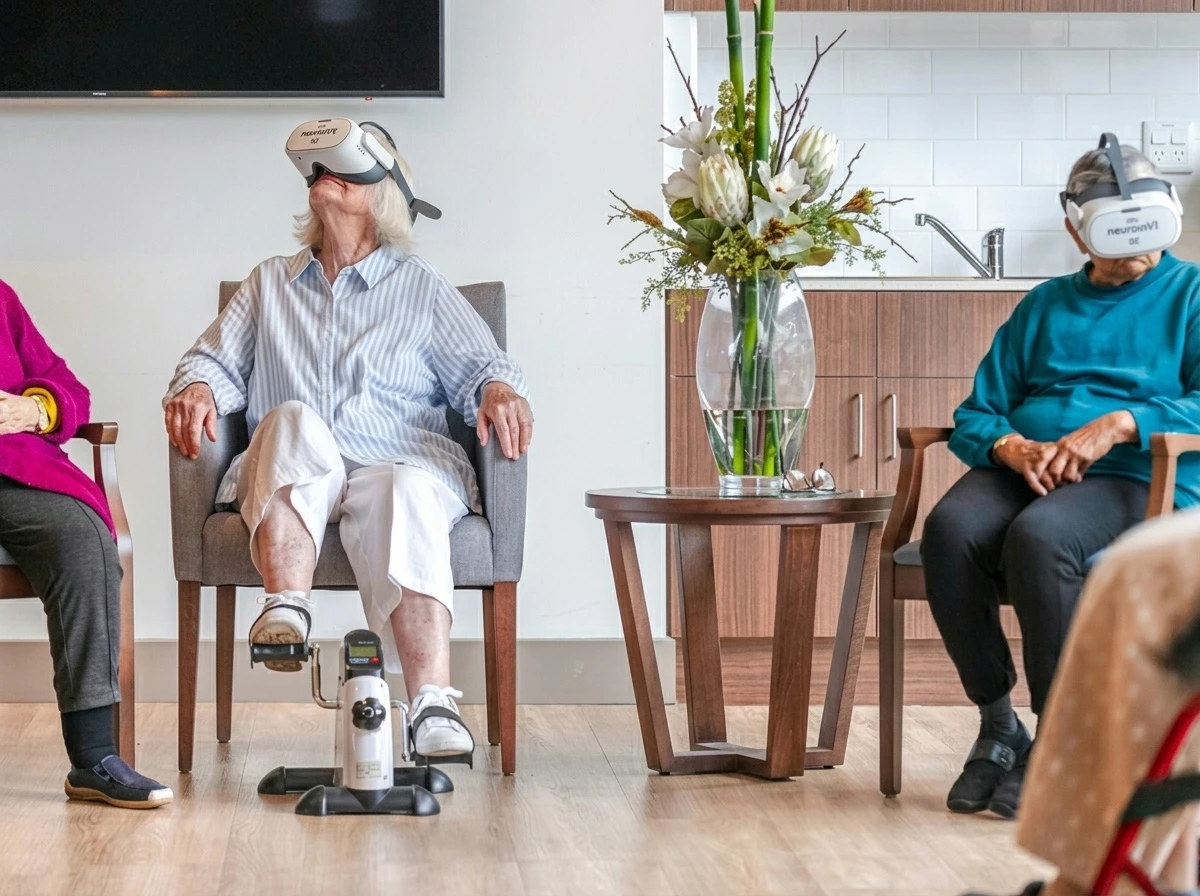
Maintaining physical movement is critical for fall prevention, functional independence and overall wellbeing in residential aged care. The challenge is motivation. Combining movement with visual stimulation improves participation, extends exercise duration and reduces resistance to physical therapy sessions.
How It Works in Practice
A pair of hiking sticks turns an alpine walking scene into a full-body activity. Physio pedals at a resident’s feet, paired with a mountain tour program, produce ten minutes of cycling that residents ask to repeat; because they want to reach the view at the top, not because they’ve been told to exercise.
Staff pair the content with prescribed exercises from the facility’s physiotherapist or OT, using the visual engagement as a distraction that reduces perceived effort and extends how long residents stay active.
—— Technique 04
De-escalation and Emotional Regulation
Behavioural and psychological symptoms of dementia including agitation, anxiety, aggression and emotional distress, are among the most difficult challenges in residential aged care. Non-pharmacological de-escalation techniques are recommended as first-line approaches before medication.
The same calming mechanism applies to procedural pain and sleep disturbance: redirecting attention and reducing arousal works across a range of clinical situations.
How It Works in Practice
When a resident is escalating, staff can start a session in under a minute with no internet required. The content redirects attention, lowers sensory overload and provides a predictable, soothing input. After a session, care teams consistently observe three things: the resident grounds back into the room noticeably calmer; then comes an “I remember” moment, with residents beginning to tell stories their care team has often never heard; and finally a release of laughter, or happy tears. That changed state lasts for two to three hours.
The same programs are used proactively: scheduled during known high-anxiety periods, as a calming intervention at 3 AM for a sleepless resident, or running alongside wound care and dressing changes to reduce procedural pain.
Want To See These Techniques in Action?
Book a demo and we'll walk your team through the techniques most relevant to your facility and residents.